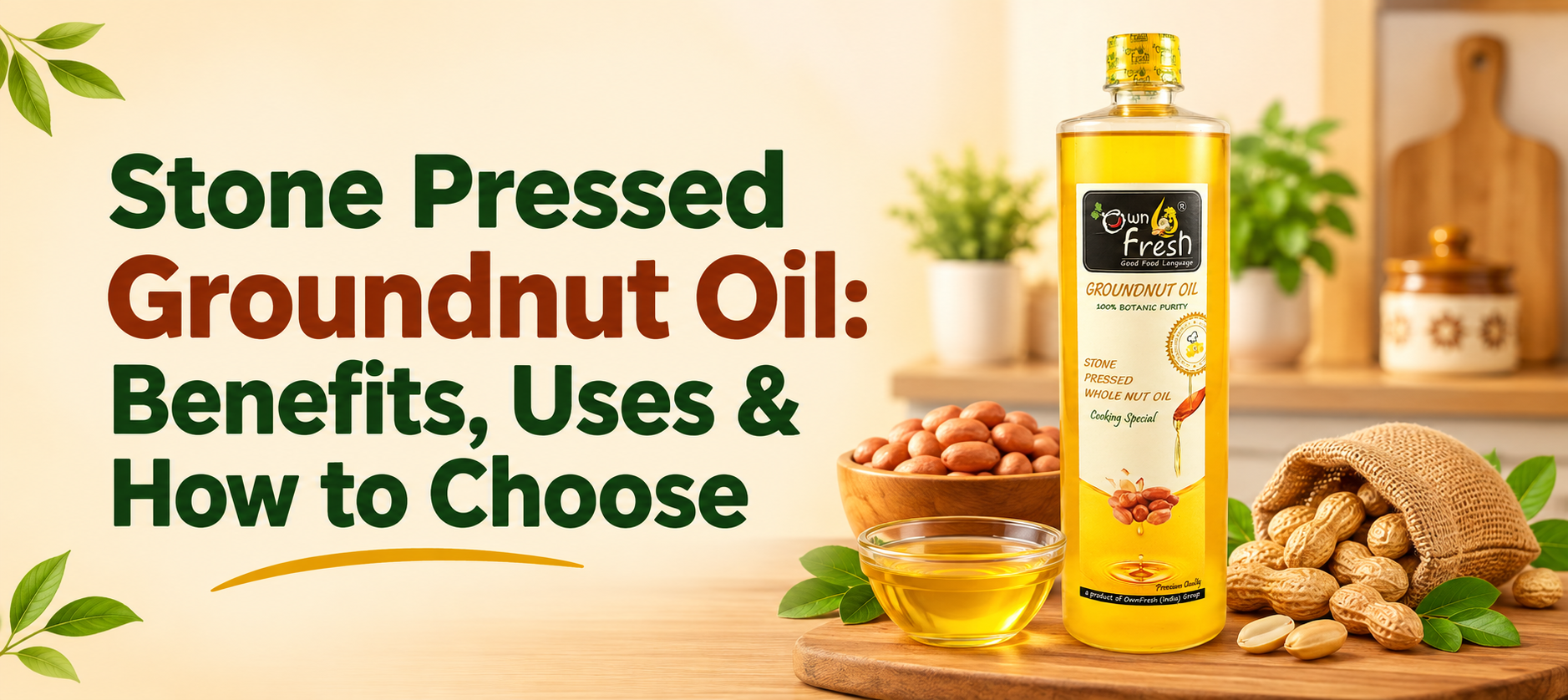
For generations, Indian kitchens prized groundnut oil pressed slowly on a granite Stone Pressed mill. Then refined oils arrived with their promise of "purity" — and quietly stripped away the nutrients that made the traditional oil worth using. In 2026, the shift back is unmistakable. Here is what stone-pressed groundnut oil actually delivers, and how to choose a genuinely cold-pressed bottle.
Table of Contents
- 1. The Granite Stone Difference
- 2. The Stone Pressed Extraction Process
- 3. Nutritional Profile
- 4. Kitchen Performance
- 5. Storage & Freshness
- 6. Frequently Asked Questions
- Is stone-pressed groundnut oil safe for high-heat cooking?
- How is stone-pressed different from cold-pressed?
- Why does stone-pressed groundnut oil have sediment at the bottom?
1. The Granite Stone Difference
Stone-pressed oil is made the way it has been for centuries: groundnuts are placed in a wooden or granite ghani, and a heavy stone wheel slowly crushes them. The friction generates a little warmth, but the temperature stays well below 45°C. No heat is applied directly, and no chemical solvent is used.
Refined oil takes the opposite path. Seeds are crushed at high temperature, then the crude oil is treated with hexane to squeeze out every last drop, and finally deodorised at 200°C+ to strip the smell. Each step removes something — and what it removes is precisely what makes the oil nutritious. The hexane is technically removed at the end, but the heat damage to heat-sensitive vitamins and antioxidants is permanent.
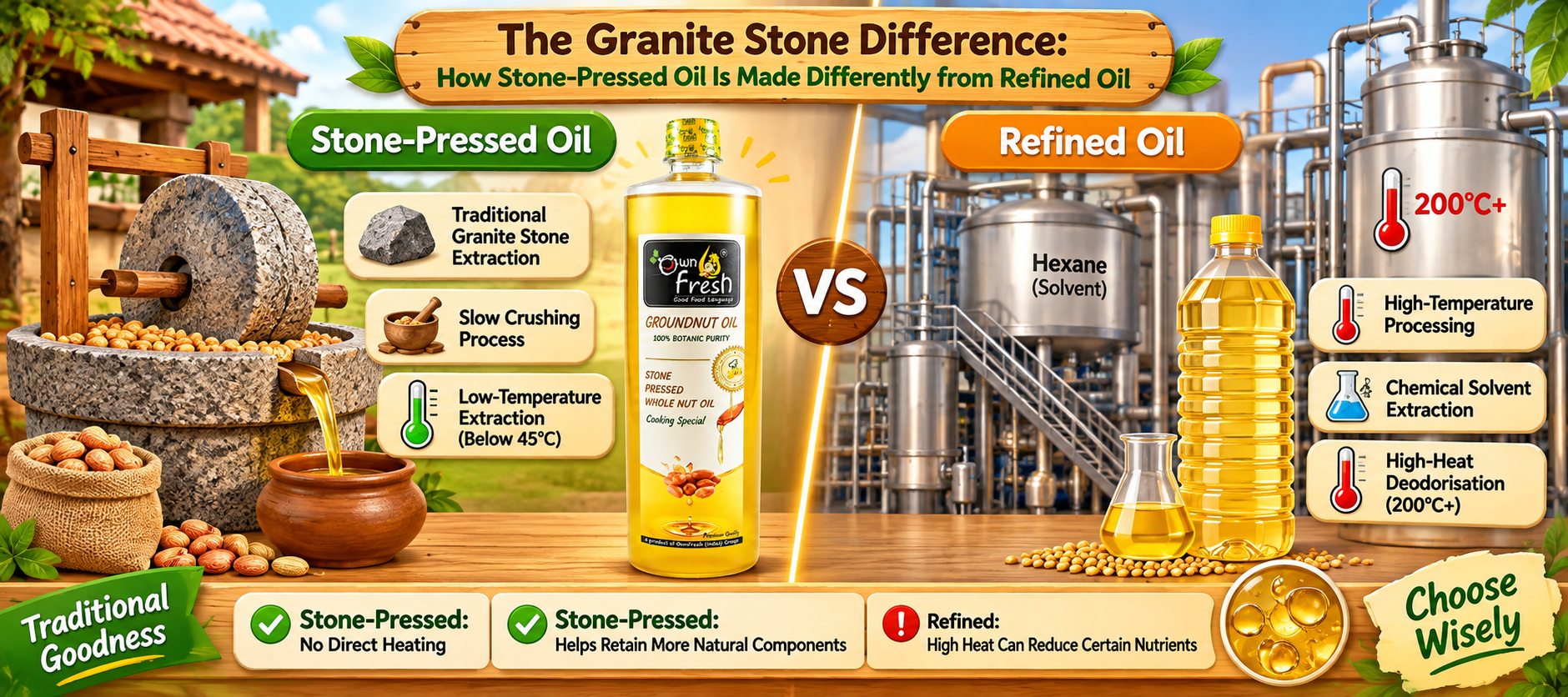
Cold pressing is not a marketing term. It is a measured fact: the oil never exceeds 45°C, so heat-sensitive nutrients survive intact.
2. The Stone Pressed Extraction Process
OwnFresh uses traditional granite stone churning, which differs from screw-press expelling in one important way: the stone wheel rotates slowly and gently, applying steady pressure rather than grinding heat into the seeds. The result is a richer, nuttier oil with visible sediment and a deeper colour — both signs that the nutrients stayed in the bottle.
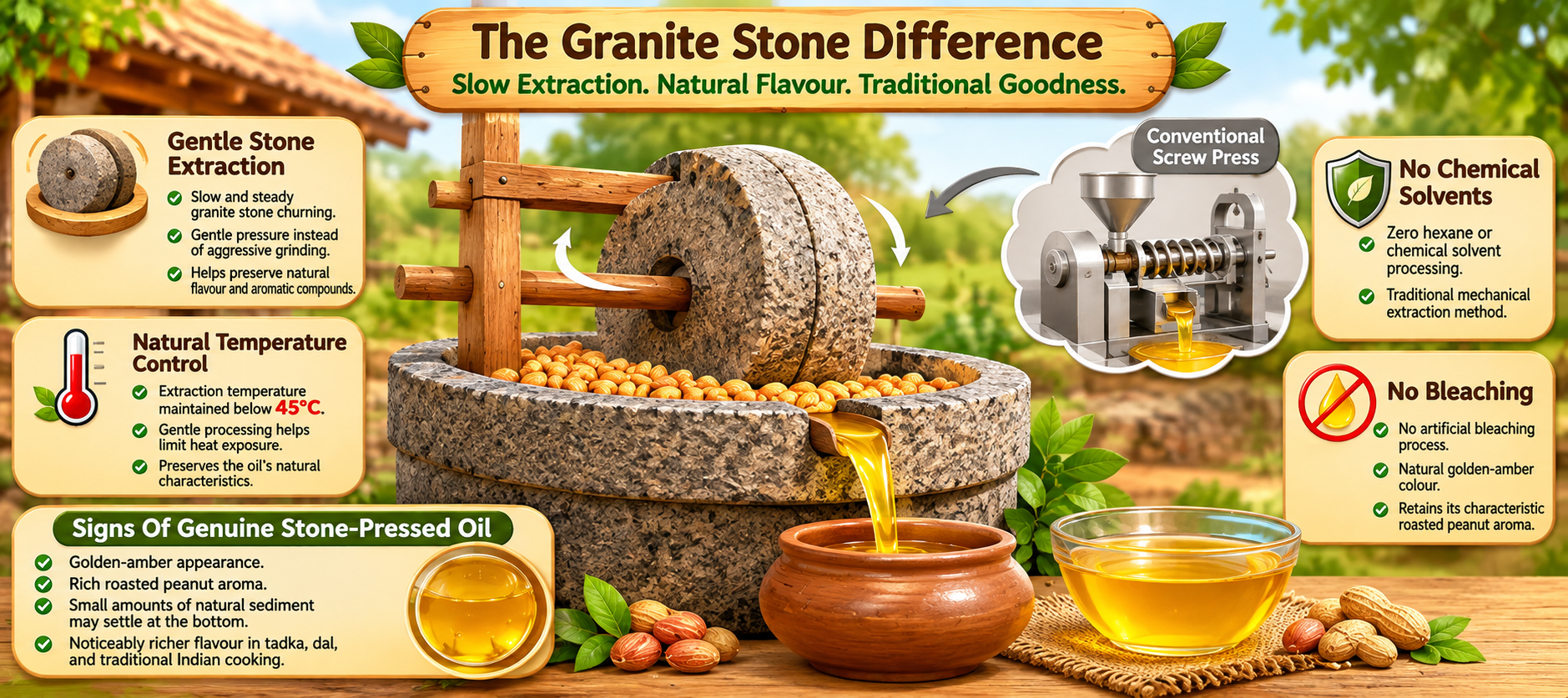
A genuinely cold-pressed groundnut oil is unrefined and unbleached. It should look golden-amber, smell of roasted peanuts, and settle a small amount of natural sediment at the bottom. If the oil is pale, odourless and crystal-clear, it has almost certainly been refined.
The processing also matters for flavour. A slow stone press releases more of the seed's natural oils and aromatic compounds, which is why stone-pressed oil tastes noticeably richer in a tempering or a simple drizzle over dal than its refined equivalent.
- Temperature ceiling: below 45°C throughout extraction.
- No hexane: zero chemical solvent in processing.
- No bleaching: the golden colour is natural, not added.
3. Nutritional Profile
Groundnut oil has one of the most balanced fatty-acid profiles of any Indian cooking oil, and cold pressing preserves what refined processing destroys.
| Nutrient | Cold-pressed groundnut oil |
|---|---|
| Monounsaturated fat (MUFA) | 46–50% oleic acid |
| Vitamin E | ~15–16 mg per 100 mL (alpha + gamma tocopherol) |
| Phytosterols | ~207 mg per 100 g |
| Resveratrol | Present — the same antioxidant found in red grapes |
| Smoke point | ~230°C for traditionally pressed crude oil |
Vitamin E is the standout: a single 100 mL delivers roughly a full day's requirement, and it is the antioxidant that protects the oil's own fats from oxidising. Refining drops it dramatically. Phytosterols — plant compounds that block cholesterol absorption in the intestine — are also far higher in the unrefined version.
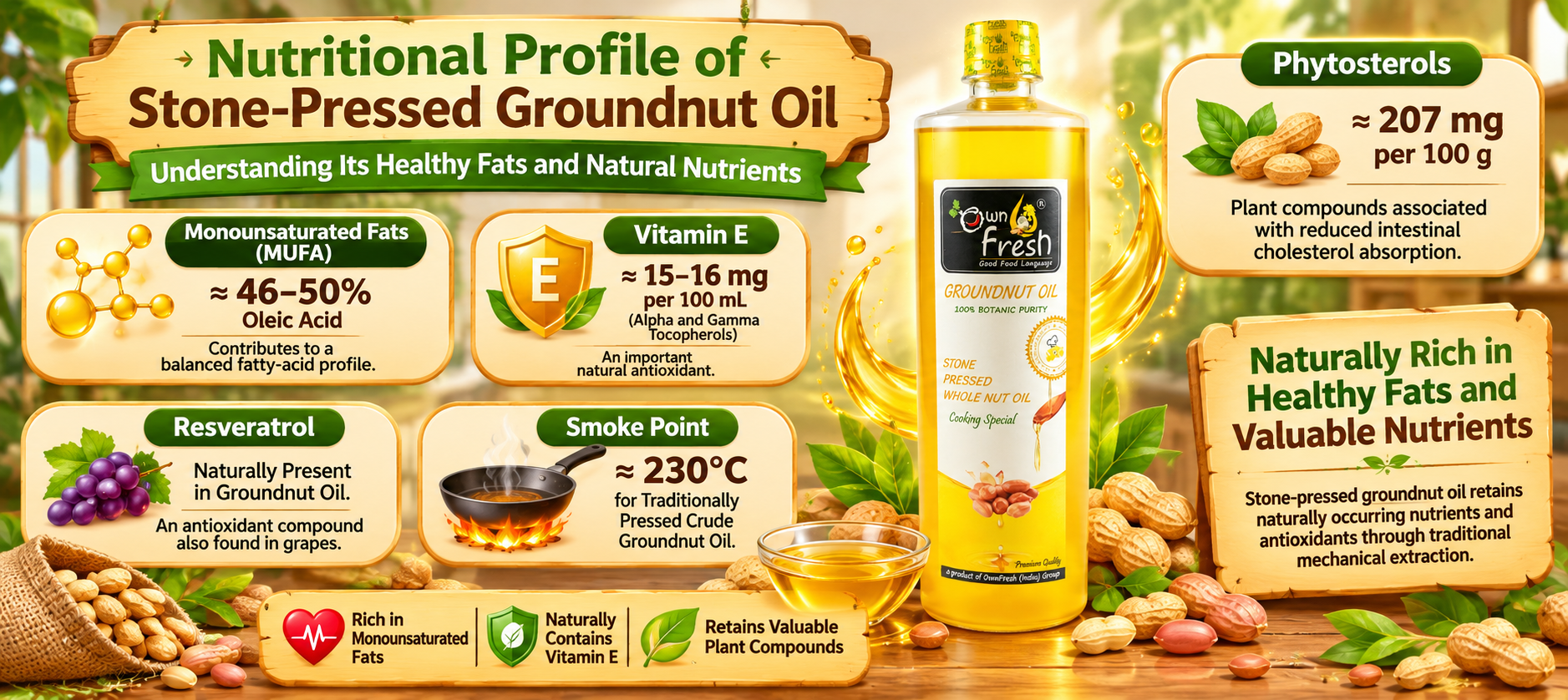
The MUFA content is what makes groundnut oil a sensible everyday choice: oleic acid is the same monounsaturated fat that gives olive oil its reputation. That is a far better fatty-acid profile than the polyunsaturated-heavy refined seed oils that dominate supermarket shelves.
4. Kitchen Performance
With a smoke point around 230°C, stone-pressed groundnut oil is one of the most versatile oils for Indian cooking. It can take the heat of deep frying without breaking down, it does not overpower the flavour of a dish, and its high MUFA content means it stays stable at high temperatures better than polyunsaturated-rich oils.
This is the practical choice for everyday use: sautéing vegetables, shallow-frying puris, tempering dals, and even the occasional festive deep fry. It is a genuine all-rounder, which is why it was the default kitchen oil in India for generations.
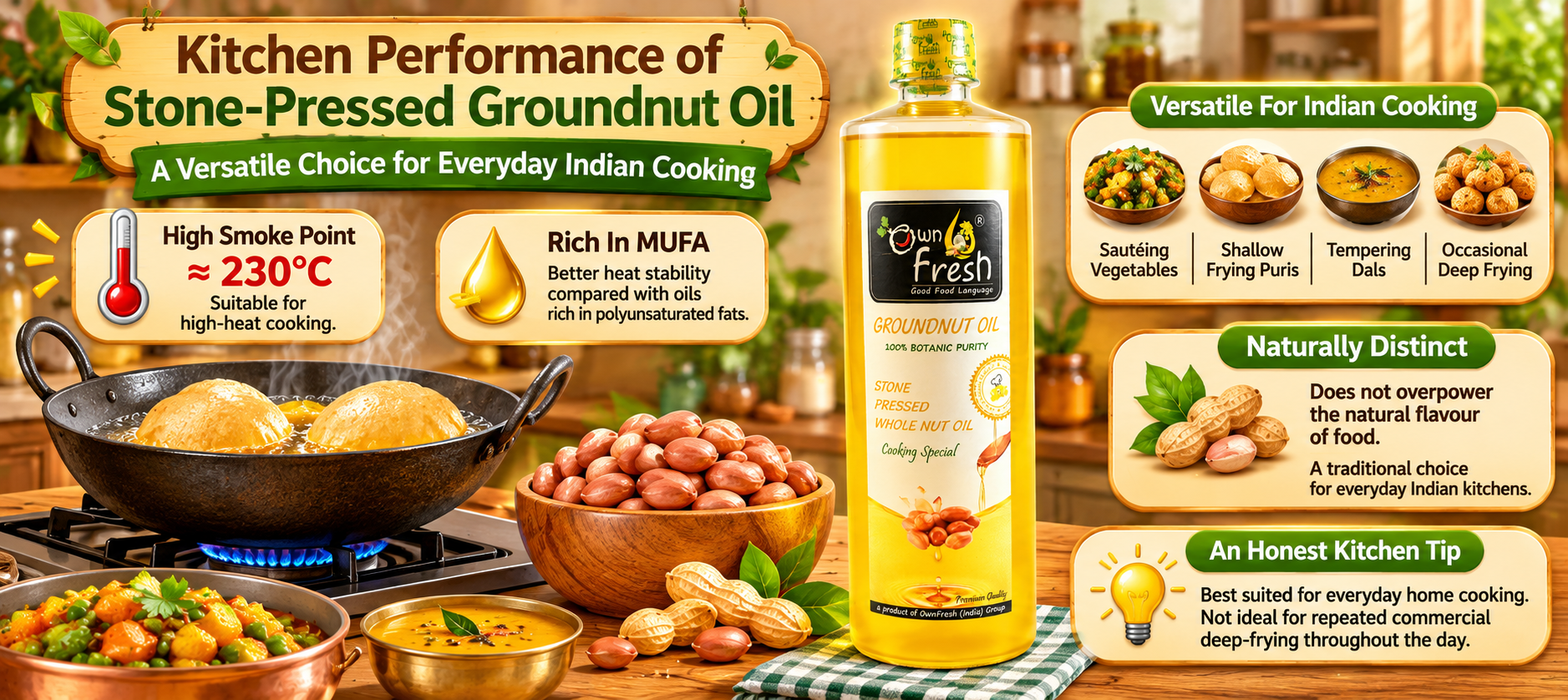
One honest note: because it is unrefined and has no added stabilisers, stone-pressed groundnut oil is not built for repeated commercial deep frying in the same way a refined oil is. For home cooking, that is irrelevant; for a restaurant kitchen running all day, it matters. We would rather you know that upfront than discover it the hard way.
5. Storage & Freshness
Unrefined oil is a living product — and that is a feature, not a flaw. It needs slightly more care than a refined oil:
- Keep it in a cool, dark place, away from direct sunlight.
- Close the lid tightly after every use to limit oxidation.
- Use it within the window printed on the bottle; the natural antioxidants delay rancidity but do not prevent it forever.
The nutty aroma that fades over time is your freshness indicator. If the oil smells sharp or soapy, it has started to oxidise. A shorter shelf life is the honest trade-off for skipping the chemical preservatives — the same reason a fresh fruit lasts days, not months.
6. Frequently Asked Questions
Is stone-pressed groundnut oil safe for high-heat cooking?
Yes. Its smoke point of roughly 230°C is well above typical Indian frying temperatures of 160–190°C, so it holds up to deep frying and tempering without breaking down into harmful compounds.
How is stone-pressed different from cold-pressed?
The terms are often used interchangeably, but stone-pressed specifically means extraction by a rotating granite wheel, while cold-pressed is a broader term for any method that keeps temperature below 45°C. Stone pressing is the traditional Indian ghani method.
Why does stone-pressed groundnut oil have sediment at the bottom?
That sediment is natural — small amounts of protein and fibre from the groundnut that settle out. It is a sign the oil is unrefined and unbleached. Shake the bottle gently before use; the sediment is harmless and adds to the flavour.